
September 30, 2026 — Editorial Team
7 Ways to Fix Sleep Schedule for Night Shift (2026)

Table of Contents
- 1. Anchor a Consistent Sleep Window
- 2. Control Light to Reset Your Night Shift Sleep Cycle
- 3. Night Shift Sleep Hygiene Tips That Actually Work
- 4. Time Your Caffeine Strategically
- 5. Consider Targeted Supplementation for Sleep Quality
- 6. Manage Your Social Life and Transition Back to Day Living
- 7. Stay Safe on the Commute and Manage Alertness
- Understanding the Long-Term Health Effects of Shift Work
- How to Stay Awake on Night Shift: A Quick Checklist
- Frequently Asked Questions
Last Updated: September 30, 2026
1. Anchor a Consistent Sleep Window
Among the 7 ways to fix sleep schedule for night shift, the most effective fix is anchoring a consistent sleep window, a fixed block of hours you protect every day, including weekends, such as 9 a.m. to 5 p.m.
2. Control Light to Reset Your Night Shift Sleep Cycle
Light is the most powerful tool for resetting your biological clock. Seek bright light during the first half of your shift, then dim it aggressively on your commute home.
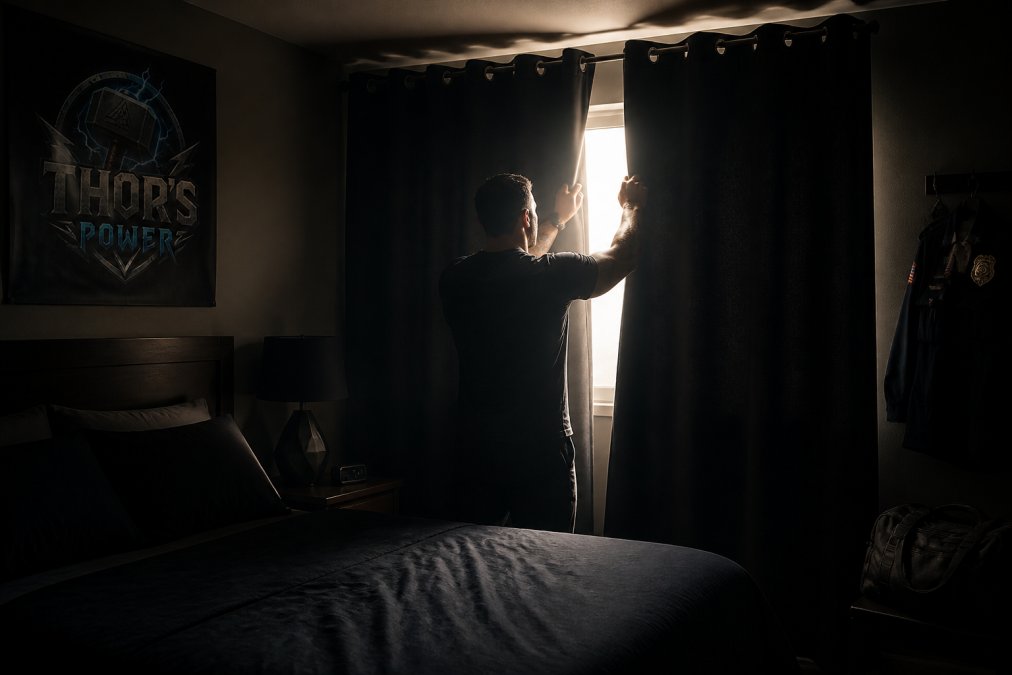
Wear sunglasses on the drive home, keep lights low, and go straight to bed.
3. Night Shift Sleep Hygiene Tips That Actually Work
Good sleep hygiene for night shift workers means keeping your bedroom a cave, cool (65-68°F), dark, and quiet, with blackout curtains, an eye mask, and earplugs or a white noise machine.
4. Time Your Caffeine Strategically
Caffeine is a tool, not a crutch. Its half-life is roughly 5-6 hours, so coffee at 4 a.m. still leaves half the caffeine in your system at 9 a.m.
Stop all caffeine 6-8 hours before your target sleep window, for a 9 a.m. bedtime, that's a 1 a.m. last cup. For smooth energy that won't wreck sleep, consider Bifröst Energy Patrol from Thor's Power: 150 mg caffeine with L-theanine and L-tyrosine for steady focus.

5. Consider Targeted Supplementation for Sleep Quality
Supplementation can support sleep quality but isn't a substitute for good habits. The most researched option is magnesium glycinate, which relaxes muscles and supports deeper sleep.
Melatonin is another option: a small dose before daytime sleep can help reset your sleep-wake cycle, but consult a healthcare professional first.
6. Manage Your Social Life and Transition Back to Day Living
A night shift schedule can be isolating. Tell friends and family about your sleep window and schedule social activities during your waking hours to prevent social jetlag.
Bifröst Energy Patrol Premium No Crash →
Transitioning back to day-living is its own challenge. Gradually shift your sleep time: if you finish nights on a Friday, stay up until a normal evening bedtime on Saturday using bright light exposure.
7. Stay Safe on the Commute and Manage Alertness
Safety is paramount, especially on the drive home. If you feel yourself nodding off, pull over, a 20-minute nap restores alertness, and caffeine takes about 30 minutes to kick in.
During your shift, take short movement breaks and use a napping strategy like a 20-minute power nap, don't nap too long or you'll wake groggy.
Understanding the Long-Term Health Effects of Shift Work
The long-term health effects of shift work are serious, which is why the 7 ways to fix sleep schedule for night shift matter so much. Chronic circadian disruption is linked to cardiovascular issues, metabolic problems, and mood disorders, shift work disorder is a recognized medical condition.
Prioritizing sleep consistency and sleep quality is your best defense.
How to Stay Awake on Night Shift: A Quick Checklist
- Anchor your sleep window: Pick a consistent 7-9 hour block and protect it.
- Control light: Bright light early in your shift; avoid it on the way home.
- Optimize your environment: Keep your bedroom cool, dark, and quiet.
- Time your caffeine: Stop 6-8 hours before your target bedtime.
- Prioritize safety: Nap before driving if you're drowsy.
Frequently Asked Questions
How do I reset my sleep schedule after working night shift?
Start by picking a fixed sleep window and keeping it within a one-hour range every day, including weekends. Block morning light with blackout curtains, wear sunglasses on your commute home, and expose yourself to bright light at the start of your shift. Most people need about a week for their circadian rhythm to shift, so stay consistent. Avoid heavy meals and caffeine in the four to six hours before your sleep window.
How can I stay awake during the night shift without crashing?
Spread your caffeine across the first half of your shift rather than drinking it all at once. Caffeine has a half-life of roughly five hours, so a 150 mg serving at the start of your shift keeps you alert without sabotaging your daytime sleep. Pair that with short movement breaks, bright light exposure, and a steady intake of water. A formula that pairs caffeine with L-theanine and L-tyrosine, like Bifröst Energy Patrol, supports focus without the hard spike-and-crash cycle.
Are there supplements that help night shift workers sleep better?
Magnesium glycinate is one of the most commonly used options for supporting relaxation before daytime sleep. Melatonin can help shift your biological clock when taken at the right time, though timing matters more than dose. For staying alert during your shift, a formula that combines caffeine with L-theanine, Alpha GPC, and rhodiola rosea supports mental clarity and focus. Talk to a healthcare professional before adding any supplement, especially if you take medication.
Fixing a night shift sleep schedule is a challenge, but it's a battle you can win with the right strategy. It takes discipline and a commitment to protecting your rest. For those long shifts when you need to stay sharp, Thor's Power is here to support you. Our Bifröst Energy Patrol is designed for smooth, no-crash energy and focus, built by a patrol deputy who understands the demands of the job. Get started with Thor's Power and fuel your performance, shift after shift.