
October 28, 2026 — Editorial Team
Caffeine and Theanine for Mental Focus: Calm Alertness

Table of Contents
- Why Caffeine and Theanine Work Together for Mental Focus
- What the Research Says About Focus, Attention, and Stress
- Caffeine and L-Theanine Ratio: Finding Your Dose Ratio
- L-Theanine With Caffeine Dosage: Amounts That Fit Your Shift
- How Long Does Caffeine and Theanine Last?
- Caffeine and L-Theanine Side Effects and Who Should Avoid the Pairing
- How to Stack Caffeine and Theanine on a 24-Hour Shift
- Frequently Asked Questions
Last Updated: October 22, 2026
Why Caffeine and Theanine Work Together for Mental Focus
Caffeine and theanine for mental focus is the pairing most shift workers stumble into by accident, usually after a gas-station energy drink leaves them wired at hour six and useless by hour fourteen. The combination works because the two ingredients push in complementary directions: caffeine sharpens alertness, while L-theanine smooths the edge off that stimulation. This guide from Thor's Power breaks down what each compound does, how to find your ratio, and how to time a dose around a 24-hour shift.
What Each Ingredient Does on Its Own
Caffeine is a stimulant that blocks adenosine receptors in the brain, which delays the feeling of tiredness and raises alertness, reaction time, and attention (The Neurophysiology of Caffeine as a Central Nervous System Stimulant and the Resultant...). L-theanine is an amino acid found naturally in tea leaves that promotes a relaxed but awake state, largely by influencing calming neurotransmitter activity.
On its own, caffeine gets you going but can overshoot into jitters, a racing pulse, and anxious restlessness. L-theanine alone is gentle, sometimes too gentle for a demanding shift. Together, they balance out.
The Calm Focus Effect: Alertness Without the Jitters
The appeal of combining caffeine and L-theanine is calm focus: the alertness of a stimulant without the shaky, over-caffeinated feeling that makes it hard to write a clear report or hold a steady hand.
Many first responders describe the difference as "switched on but steady." That is the target state. Theanine does not sedate you; it takes the sharp edges off caffeine's stimulation so concentration holds longer.
What the Research Says About Focus, Attention, and Stress
Clinical evidence on the pairing is promising but not settled, and the quality of that evidence matters more than the headline. Most of what we know comes from small, short trials using isolated cognitive tasks rather than real-world shift conditions, so the honest read is supportive, not definitive.
What Researchers Actually Measure
When a study reports that caffeine plus L-theanine "improves focus," it is usually measuring one of a few concrete outcomes:
- Reaction time, how quickly you respond to a stimulus, often via a computer-based task.
- Attention accuracy, how many targets you correctly identify versus miss.
- Task-switching performance, how well you hold and shift rules under load.
- Subjective alertness, self-reported ratings of feeling focused, which are useful but not the same as performance.
The distinction matters. A participant can feel calmer and report better focus while objective reaction time is unchanged, or vice versa. Treat subjective reports and measured performance as separate signals.
What the Trials Tend to Show
A common pattern across the literature is that the combination produces a smoother attention profile than caffeine alone, fewer peaks and troughs in performance during sustained tasks, and that some trials report reduced susceptibility to distraction.
What the research does not establish is a universal dose, a universal ratio, or a guaranteed effect for every person. Sample sizes are often small, durations are typically hours to days rather than weeks, and many trials use isolated tasks rather than real-world shift conditions.
How to Read a Study Headline
When you see a new study on caffeine and L-theanine, ask three questions before you change your routine: How many people were in it? How long did it run? And did it measure performance or just ask people how they felt? A small, single-session trial that measured subjective alertness is a weaker signal than a larger, multi-day trial that measured reaction time.
Caffeine and L-Theanine Ratio: Finding Your Dose Ratio
The caffeine and L-theanine ratio most often discussed is roughly 1:1 to 1:2, meaning equal parts or twice as much theanine as caffeine. A frequent starting point is 100 mg caffeine paired with 100-200 mg L-theanine.
Here is a practical way to dial it in:
| Your Response | Adjustment |
|---|---|
| Jittery, anxious, or tense | Increase theanine relative to caffeine |
| Sleepy, foggy, unmoved | Increase caffeine slightly, keep theanine steady |
| Sharp but wired at hour 3 | Lower total caffeine, hold theanine |
| Calm but flat | Add caffeine, keep theanine at current level |
Start with a modest dose, note how you feel at the 90-minute mark, and adjust one variable at a time.
L-Theanine With Caffeine Dosage: Amounts That Fit Your Shift
L-theanine with caffeine dosage depends on your body weight, tolerance, and shift length. A common range is 100-150 mg caffeine with 100-200 mg L-theanine for a moderate focus window.
For longer or harder shifts, some people step up toward 200 mg caffeine, though that pushes closer to the ceiling many adults prefer to stay under daily. If you are caffeine sensitive, stay at the low end.
Bifröst Energy Patrol Premium No Crash Energy →
How Long Does Caffeine and Theanine Last?
Caffeine and theanine last different lengths of time, which is why timing matters. Caffeine's effects typically peak within 30 to 60 minutes and can linger for several hours, with a half-life that keeps a portion active well into your shift.
That mismatch is the reason a single dose can feel great early and thin out later. Some shift workers re-dose theanine mid-shift without adding more caffeine.
Caffeine and L-Theanine Side Effects and Who Should Avoid the Pairing
Caffeine and L-theanine side effects are usually mild, but the pairing is not right for everyone, and the higher-risk groups deserve more than a one-line caveat. This section separates the common from the cautionary.
Common, Usually Mild Effects
- Headache, often from caffeine dose changes rather than theanine.
- Digestive upset, more common with larger single doses or on an empty stomach.
- Disrupted sleep, driven by caffeine timing, not theanine.
- Jitters or restlessness, usually a sign the caffeine dose is too high for your sensitivity.
L-theanine on its own is generally well tolerated, and most people who experience side effects find they are tied to the caffeine half of the pairing.
Interactions to Check With a Pharmacist or Clinician
Caffeine can interact with several common medication classes, and theanine's interaction profile is less studied. Before adding the pairing, flag these to a qualified healthcare professional:
- Stimulants (including prescription stimulants for attention conditions), stacking can amplify heart rate and blood pressure effects.
- Certain antidepressants and anti-anxiety medications, some affect how caffeine is metabolized.
- Blood pressure and heart medications, caffeine can transiently raise blood pressure and heart rate.
- Blood thinners, caffeine's effect on platelet function is modest but worth mentioning.
This is not a complete list. The point is to have the conversation rather than assume the pairing is inert.
Higher-Risk Groups
- Pregnancy and nursing, caffeine crosses the placenta and enters breast milk; most guidance advises limiting total caffeine, and theanine's safety in pregnancy is not well established.
- Cardiovascular conditions, arrhythmias, uncontrolled hypertension, and structural heart conditions warrant clinician input before adding stimulants.
- Anxiety disorders, caffeine can worsen anxiety symptoms in some people; theanine may help, but it is not a substitute for treatment.
- Adolescents, caffeine guidance for teens is more conservative than for adults, and theanine's use in this group is not well studied.
- Liver or kidney conditions, metabolism and clearance may differ.
When to Stop
Stop and seek advice if you notice a racing or irregular heartbeat, chest discomfort, unusual anxiety, or persistent headaches after starting the pairing. Most practitioners find that these signals are dose-related and resolve when caffeine is reduced, but they should not be ignored.
How to Stack Caffeine and Theanine on a 24-Hour Shift
Stacking caffeine and theanine on a 24-hour shift comes down to timing, not just dose. Here is how we would approach it:
- Front-load lightly. Take a moderate dose at the start of your shift, not the maximum.
- Match theanine to the peak. Pair it with your caffeine so the calm-focus window lines up.
- Re-dose theanine, not caffeine. If focus thins mid-shift, add theanine alone.
- Cut caffeine early. Stop caffeine several hours before you expect to sleep.
- Hydrate throughout. Water supports steady energy better than another stimulant.
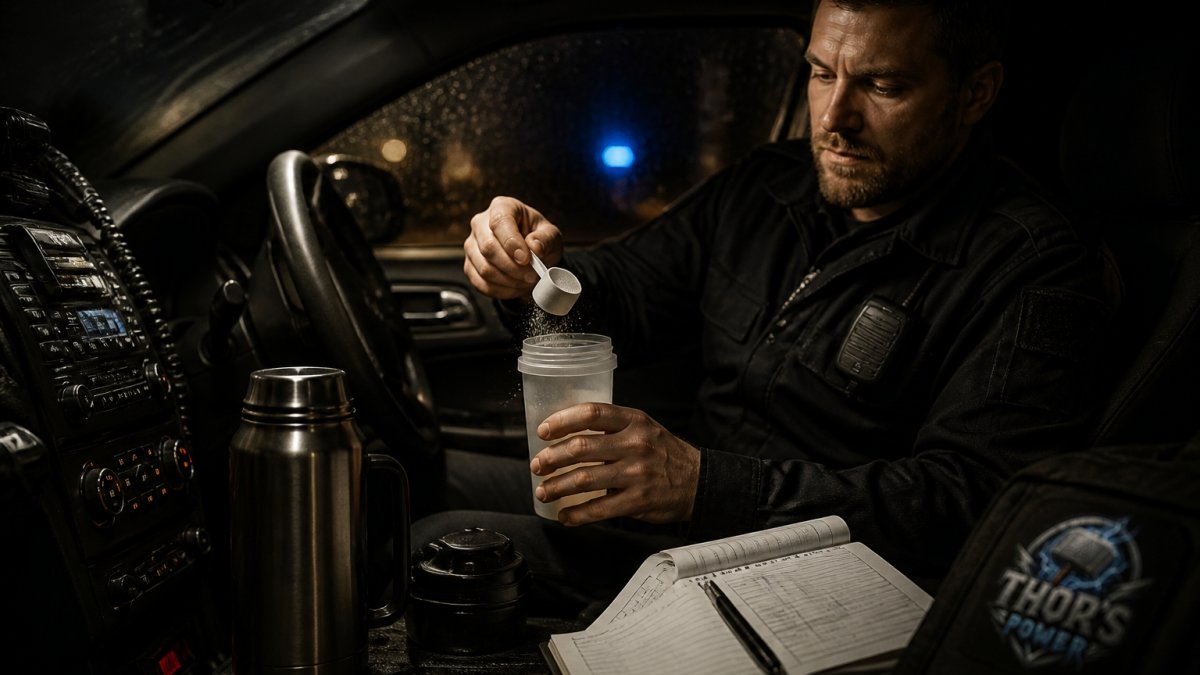
This is where a transparent formula helps. Our Bifröst Energy Patrol pairs 150 mg of caffeine with L-theanine alongside L-tyrosine, taurine, Alpha GPC, and rhodiola rosea, built for smooth, no-crash energy rather than a spike.

Frequently Asked Questions
Do caffeine and L-theanine work well together for focus?
They pair well because the two ingredients pull in complementary directions. Caffeine raises alertness and reaction time, while L-theanine supports a calmer, more settled state without heavy sedation. Taken together, the combination is often described as calm focus or jitter-free alertness. Research on attention and reaction time generally supports the pairing, though study designs vary and individual response depends on your caffeine sensitivity, dose, and timing. Start with a modest dose and judge how you feel across a full shift before adjusting.
What is a common caffeine-to-L-theanine ratio?
A frequently cited dose ratio is roughly 1:1 to 1:2 caffeine to L-theanine. In practical terms, that means 100 mg of caffeine with 100 to 200 mg of L-theanine, or 150 mg of caffeine with 150 to 300 mg of L-theanine. Many people find the 1:1 ratio a reasonable starting point and increase the theanine side if they still feel edgy. If you are caffeine sensitive, lean toward the higher theanine end or lower the caffeine amount first.
How long does the caffeine and L-theanine combination take to work?
Most people notice effects within 30 to 60 minutes of taking caffeine and theanine together, which lines up with caffeine's typical absorption window. L-theanine on its own is usually felt sooner, often within 30 minutes. Taking the pair on a relatively empty stomach tends to speed things up. If you need focus to peak at a specific point in your shift, work backward from that time and dose about 45 minutes earlier, then adjust based on your own response.
Can caffeine and L-theanine cause side effects?
The most common caffeine and L-theanine side effects come from the caffeine side: jitteriness, rapid heartbeat, upset stomach, headache, and disrupted sleep, especially with higher doses or late-day use. L-theanine is generally well tolerated, with few reported issues. People with caffeine sensitivity, anxiety disorders, heart conditions, or those taking medication should talk to a healthcare professional before combining them. Keep total daily caffeine within moderate limits and avoid stacking close to bedtime.
Is it safe to take caffeine and L-theanine every day?
For most healthy adults, daily use at moderate caffeine amounts is generally considered acceptable, and L-theanine has a good tolerability record. The bigger concern is caffeine tolerance: regular use can blunt the alertness benefit, and stopping abruptly can bring withdrawal headaches and fatigue. Cycle your intake down on lighter days, keep total caffeine moderate, and avoid using the pairing as a substitute for sleep. Anyone pregnant, nursing, or managing a medical condition should check with a clinician first.
Who should avoid combining caffeine and L-theanine?
People with caffeine sensitivity, diagnosed anxiety disorders, irregular heart rhythms, uncontrolled high blood pressure, or sleep disorders should be cautious and consult a healthcare professional. The same applies to anyone taking stimulant medication, blood pressure medication, or other supplements with caffeine. Pregnant and nursing individuals are generally advised to limit caffeine. If you are unsure how you respond, start with a low caffeine dose, avoid stacking multiple caffeinated products in one day, and note how your sleep and mood react.
Caffeine and theanine only work as well as your timing and dose allow, and getting both right takes some trial. If you want a formula that already pairs them thoughtfully, Thor's Power built Bifröst Energy Patrol with 150 mg caffeine and L-theanine for steady, no-crash focus, plus a transparent label with no proprietary blend. Shop the Bifröst lineup and give your next shift a cleaner edge.