
October 27, 2026 — Editorial Team
Clean Energy Supplements for First Responders: 6 Picks

Table of Contents
- What "Clean Energy" Actually Means on a Supplement Label
- How We Evaluated These Clean Energy Supplements
- 1. Bifröst Energy Patrol: A Transparent Energy Drink Mix for First Responders
- 2. Bifröst Multi-Tub Packs for Shift Workers Who Burn Through Servings
- 3. Caffeine Limit Per Day: How 150 mg Fits a 12-Hour Shift
- 4. Best Supplements for Firefighters: Heat, Hydration, and Long Calls
- 5. Third-Party Testing and Contamination Risk
- 6. Medication Interactions and Medical Considerations
- Frequently Asked Questions
Last Updated: October 21, 2026
What "Clean Energy" Actually Means on a Supplement Label
Clean energy supplements are formulas built to support alertness and focus without leaning on a single heavy stimulant dose, and the label tells you whether a product earns that description. At Thor's Power, we read a label in four places: total caffeine per serving, whether the caffeine is paired with focus-supporting ingredients, whether the blend is disclosed, and whether the product has been tested by an outside lab. A formula that lists every ingredient and its amount is clean. A formula that hides behind a proprietary blend is not, no matter what the front of the tub says.
Most shoppers scan for the word "natural" and stop there. That word carries no legal weight on a supplement label. What matters is whether you can see the dose.
How We Evaluated These Clean Energy Supplements
We scored each option on five criteria: disclosed dosing, caffeine per serving, supporting ingredients for focus and stress, format and servings per tub, and whether the label carries a clear safety statement. We weighted disclosure heaviest. A product you cannot read is a product you cannot dose around a 12-hour shift.
Every pick below comes from our own line, because we build for this audience and we can show you the full formula. Where a category matters more than a brand, we explain what to look for so you can judge any label. Guidance from the FDA on dietary supplement labeling is the standard we hold labels to.
1. Bifröst Energy Patrol: A Transparent Energy Drink Mix for First Responders
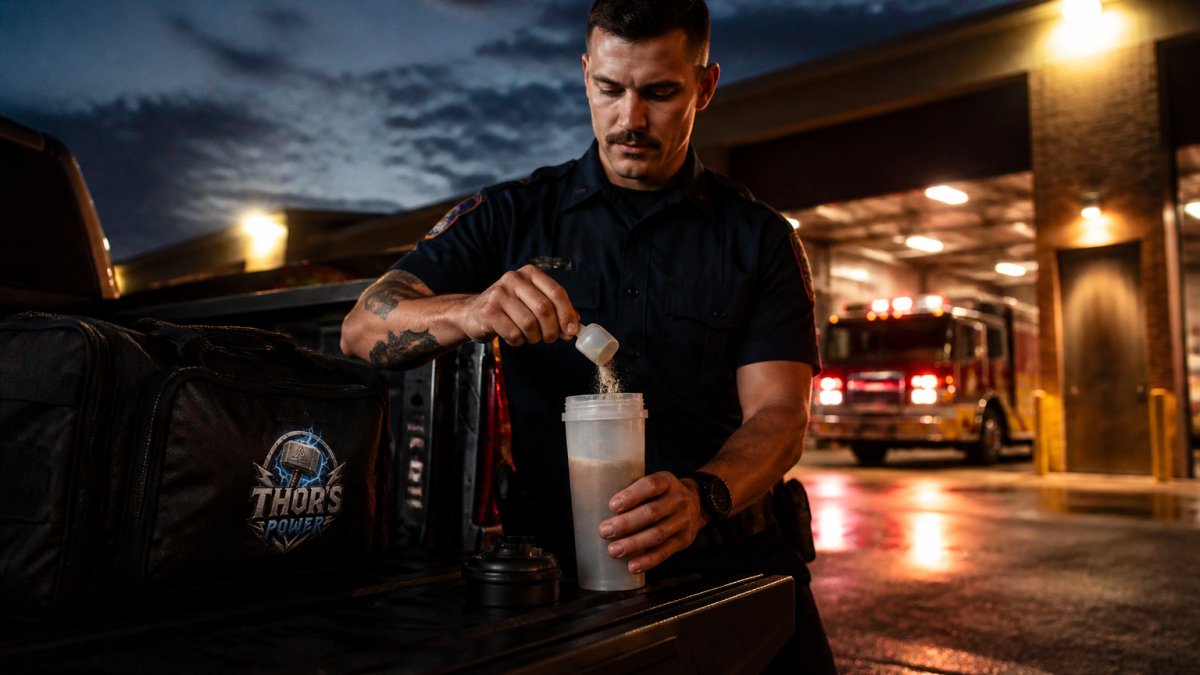
Our top pick is Bifröst Energy Patrol, a Blue Raspberry energy drink mix built around 150 mg of caffeine per serving with no proprietary blend. It comes in 30-serving tubs and convenient single-serving sachets.

What's in the Formula
Each serving pairs caffeine anhydrous with L-theanine, L-tyrosine, taurine, Alpha GPC, acetyl L-carnitine, rhodiola rosea, and Coenzyme Q10. The design goal is steady output rather than a spike, which is the difference between a productive shift and a crash at hour 18.
The honest limitation: 150 mg is moderate by design. If you are used to stacking multiple cans, one serving will feel gentler, and that is the point. The NIH Office of Dietary Supplements caffeine fact sheet is a useful reference for how caffeine behaves in the body.
2. Bifröst Multi-Tub Packs for Shift Workers Who Burn Through Servings
If you go through a tub faster than you expect, multi-tub packs cut the cost per serving and remove the mid-month reorder. The Loki Pack holds three tubs at 90 total servings, and the Fenrir pack holds two tubs at 60 servings. Both ship free at 30 servings and above.

For a 24-hour shift rotation, work out your real usage first. Two servings on a double, four shifts a week, puts you near 30 servings a month. Buy to that number, not to the sale banner.
3. Caffeine Limit Per Day: How 150 mg Fits a 12-Hour Shift
A common caffeine limit per day for healthy adults is around 400 mg, which leaves room for roughly two 150 mg servings plus a coffee. The FDA guidance on caffeine and how much is too much is the reference point most workplace safety conversations start from.
Here is how that plays out across a shift:
| Shift Window | Serving | Caffeine | Why |
|---|---|---|---|
| Start of watch | 1 serving | 150 mg | Baseline alertness without a spike |
| Mid-shift slump | 1 serving | 150 mg | Covers the low point, keeps total under 400 mg |
| Final hours | Skip or half | 0-75 mg | Protects sleep before the next rotation |
4. Best Supplements for Firefighters: Heat, Hydration, and Long Calls
The best supplements for firefighters support hydration and steady energy, because heat exposure and turnout gear raise fluid loss long before fatigue shows up. Caffeine is a mild diuretic, so pair every serving with water, not with another caffeinated drink.
Bifröst Energy Patrol Premium No Crash Energy →
Energy supplements for shift workers should be judged on the same terms: does the formula keep you functional through a long call without a hard drop afterward? For fire and EMS crews, we recommend treating a serving as part of a hydration plan rather than a replacement for one.
Timing Around a 24-Hour Shift
Front-load caffeine early, taper late. One serving at the start of watch and one at the mid-point covers most crews. On a 24, keep the second serving before the overnight quiet period rather than after it.
5. Third-Party Testing and Contamination Risk
Third-party testing means an outside lab has checked a product for banned substances and label accuracy, and it is the single best signal that a supplement is safe for a drug-tested responder. Ask for the certificate, not a badge on the website.
Contamination risk is real in this category. Products sold as pre-workout or energy sometimes carry undeclared stimulants. The NSF Certified for Sport program explains what independent certification actually verifies. If a brand cannot produce a lab result, treat the claim as marketing.
6. Medication Interactions and Medical Considerations
Anyone taking prescription medication, managing a heart condition, or sensitive to caffeine should talk to a clinician before adding any energy supplement. That is not a disclaimer we hide in small print; it is the first question worth asking.
Stimulants can interact with blood pressure medication, some antidepressants, and thyroid drugs. If you are pregnant or nursing, skip caffeine-forward products entirely. The label on every Bifröst product states the same thing, and we mean it.
Frequently Asked Questions
How much caffeine is too much in a day for a first responder?
The FDA cites 400 mg of caffeine per day as an amount not generally associated with negative effects in healthy adults. A 150 mg serving of a clean energy supplements formula leaves room for a cup of coffee without pushing past that line. The bigger issue is timing: caffeine has a half-life of roughly five hours, so a serving late in a night shift can still be active when you try to sleep. Track total intake across coffee, energy drinks, and pre-workout, not just one product.
What ingredients should first responders look for in an energy supplement?
Start with a disclosed caffeine amount per serving, then look for L-theanine, which is paired with caffeine to support calm focus rather than a jittery spike. L-tyrosine, Alpha GPC, and acetyl L-carnitine appear in formulas built around mental clarity. Rhodiola rosea and CoQ10 show up in products aimed at stress support and sustained output. Skip anything with a proprietary blend that hides individual doses, since you cannot judge a formula you cannot read.
Are energy supplements safe to use during overnight shifts?
For most healthy adults, a moderate-caffeine supplement used early in a night shift is reasonable. The practical risk is sleep disruption. If you take a serving at hour 10 of a 12-hour shift, a meaningful portion of that caffeine is still circulating when you get home. Many shift workers take their last serving at least six hours before planned sleep and use hydration and movement for the final stretch. Anyone with a heart condition, anxiety disorder, or prescription medication should check with a clinician first.
How can first responders stay alert without relying on too much caffeine?
Rotate the tools. A 150 mg serving of an energy drink mix for first responders covers the mid-shift dip, while cold water, a short walk, and bright light handle the smaller lulls. Hydration matters more than most people expect, since even mild dehydration worsens concentration. Keep total caffeine under the 400 mg daily mark, avoid stacking a supplement on top of multiple coffees, and protect your sleep window on the back end. No supplement replaces sleep debt.
Do clean energy supplements get third-party tested?
Testing varies by brand, and the label is where you find out. Look for a certificate of analysis you can request, a named testing lab, and a disclosed ingredient panel with no proprietary blends. Products marketed to first responders and military personnel carry extra scrutiny because many agencies screen for banned substances. If a brand will not show you testing documentation, treat the clean energy claim as marketing rather than a verified fact.
Your schedule does not pause for a crash, and your energy product should not create one. Thor's Power builds clean energy supplements for first responders around disclosed formulas, moderate caffeine, and focus-supporting ingredients, with Bifröst Energy Patrol at 150 mg per serving, multi-tub packs for heavy rotations, and single-serving sachets for a gear bag. Get started with Thor's Power and keep your edge from the first call to the last report.