
September 23, 2026 — Editorial Team
How to Boost Endurance Without Jitters: 7 Proven Steps

Table of Contents
- Step 1: Build Your Aerobic Base with Steady-State Cardio
- Step 2: Use Interval Training to Raise Your Anaerobic Threshold
- Step 3: Try a Caffeine-Free Pre Workout for Endurance
- Step 4: Learn How to Improve Stamina for Shift Work
- Step 5: Natural Ways to Increase Physical Endurance
- Step 6: Dial In Hydration and Electrolyte Balance
- Step 7: Manage Recovery to Avoid Overtraining Syndrome
- Common Mistakes That Cause Jitters and Crash
- Frequently Asked Questions
Last Updated: September 23, 2026
Step 1: Build Your Aerobic Base with Steady-State Cardio
Learning how to boost endurance without jitters starts with your aerobic base, not with a stimulant. Steady-state cardio is the foundation: 30 to 45 minutes of easy running, rowing, cycling, or rucking at a pace where you can still hold a conversation.
Try this simple structure:
- 3 to 4 steady sessions per week
- Keep the pace easy enough to talk
- Add 5 minutes to your longest session each week
- Hold one long session on your off day
Small, repeatable work beats one heroic effort.
Step 2: Use Interval Training to Raise Your Anaerobic Threshold
Interval training is short bursts of hard work followed by rest. It pushes your anaerobic threshold higher, so hard efforts feel easier for longer. The catch is timing: intervals are intense, so two sessions a week is plenty for most people.
Pick the Right Work-to-Rest Ratio
The ratio you choose determines what you adapt to. A common framework:
- 1:3 or 1:4 (work:rest), sprint-style efforts of 20 to 30 seconds. Builds top-end power and neuromuscular drive. Best for short, sharp bursts.
- 1:2, efforts of 1 to 2 minutes. The classic VO2 max zone. Raises the ceiling on how much oxygen you can use.
- 1:1, efforts of 3 to 5 minutes. Trains lactate clearance and threshold pace. This is the ratio that most directly raises the anaerobic threshold.
- 2:1, efforts of 6 to 10 minutes. Tempo-style work that builds sustained power at a hard but repeatable pace.
A Basic Session
- Warm up easy for 10 minutes.
- Go hard for 1 minute.
- Recover easy for 2 minutes.
- Repeat 6 to 8 times.
- Cool down for 5 minutes.
Keep the hard efforts controlled. If your heart rate stays pinned and your breathing never settles during rest, you are pushing past the point of useful adaptation.
Know Your Heart Rate Zones
Heart rate zones give you an objective way to keep intervals honest. The standard five-zone model, based on percentage of maximum heart rate:
| Zone | % of Max HR | What It Trains |
|---|---|---|
| 1 | 50-60% | Recovery, active rest |
| 2 | 60-70% | Aerobic base, fat oxidation |
| 3 | 70-80% | Aerobic power, tempo |
| 4 | 80-90% | Anaerobic threshold, VO2 max |
| 5 | 90-100% | Neuromuscular power, sprints |
Progress the Sessions, Not Just the Effort
Adding intensity every week leads to burnout. Instead, progress one variable at a time:
- Week 1-2: 6 intervals at 1:2
- Week 3-4: 8 intervals at 1:2
- Week 5-6: 6 intervals at 1:1
- Week 7-8: 4 intervals at 2:1
The Trade-Off to Respect
Intervals deliver more endurance per minute than steady-state work, but they also carry more recovery cost. Two sessions a week is the sweet spot for most people. Three is the ceiling for well-trained athletes who sleep and eat well. Beyond that, the nervous system, not the muscles, is what breaks down first, and the symptoms look a lot like the jitters you are trying to avoid: restless sleep, a racing pulse at rest, and a short fuse.
Step 3: Try a Caffeine-Free Pre Workout for Endurance
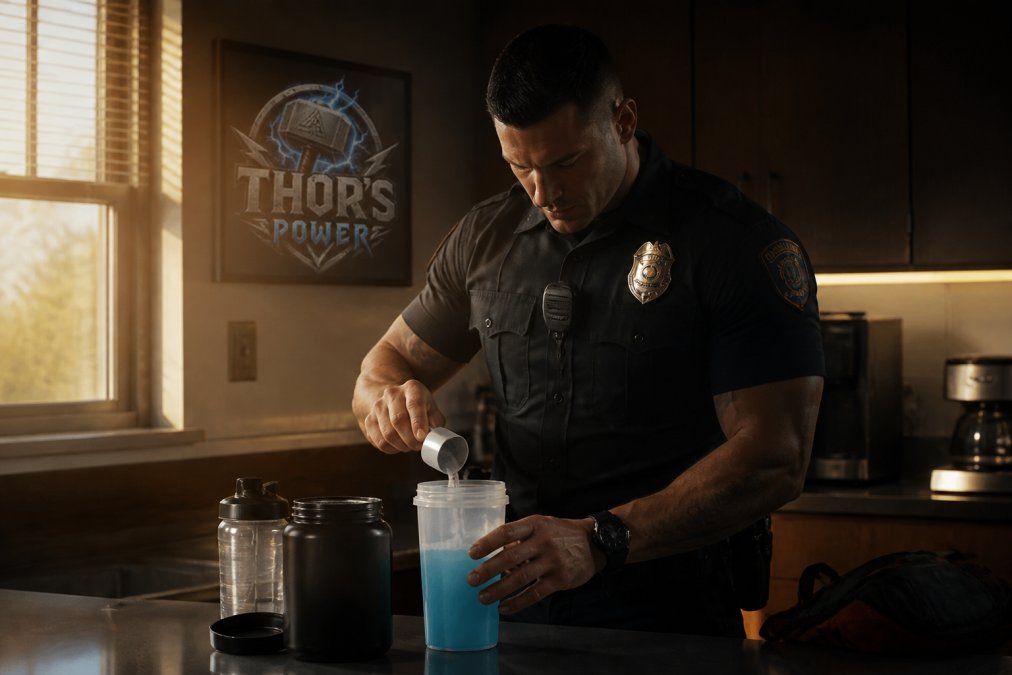
A caffeine-free pre workout for endurance delivers energy support without the spike-and-crash cycle. Caffeine works, but it also causes jitters, a racing heart, and a hard drop hours later. For anyone on a long shift, that drop is the real problem.
Ingredients That Support Energy Without Stimulants
Stimulant-free formulas lean on ingredients that support focus and blood flow instead of raw stimulation. Common options include:
- L-theanine for calm, steady focus
- L-tyrosine for mental drive under stress
- Taurine for muscular endurance support
- Alpha GPC for cognitive performance
- Rhodiola rosea for stress resilience
- Coenzyme Q10 for cellular energy support
How to Time Your Pre-Workout for Long Shifts
Take a stimulant-free pre-workout 20 to 30 minutes before you need the lift. For a 12-hour shift, that means one serving at the start and a second around the midpoint, not stacked back to back. Spacing servings keeps energy level instead of spiking it.
Step 4: Learn How to Improve Stamina for Shift Work
Knowing how to improve stamina for shift work comes down to managing sleep and movement, not just supplements. Irregular schedules wreck your circadian rhythm, and no powder fixes that alone.
Sleep Strategies for Irregular Schedules
- Keep your sleep window as consistent as possible, even on rotating shifts
- Use blackout curtains and a white noise machine
- Avoid heavy meals in the two hours before sleep
- Nap 20 minutes before a night shift, not longer
Micro-Breaks and Active Recovery During 12-Hour Shifts
Stand and move every 45 to 60 minutes. A two-minute walk, a few bodyweight squats, or a set of calf raises restores circulation and clears mental fog. These micro-breaks do more for sustained stamina than another cup of coffee.
Step 5: Natural Ways to Increase Physical Endurance
Natural ways to increase physical endurance come down to training consistency and smart recovery, not shortcuts. Progressive overload, better breathing, and bodyweight conditioning all raise endurance without a stimulant. But the piece most guides skip is the one that matters most for the 'without jitters' half of the question: the non-stimulant inputs that keep energy steady across a long day.
Train the System, Not Just the Muscle
Endurance is a whole-system adaptation. Three levers do most of the work:
- Progressive overload, add 5 to 10 percent more volume each week. More time under aerobic load means more capillaries, more mitochondria, and a bigger stroke volume from the heart.
- Nasal breathing on easy days, breathing through the nose raises carbon dioxide tolerance and improves respiratory efficiency. It also forces an easy pace, which keeps you in Zone 2 where the aerobic base is built.
- Bodyweight circuits for muscular endurance, push-ups, squats, lunges, planks, and step-ups done in short rounds build the local endurance that carries you through the last hour of a shift.
Non-Stimulant Energy Inputs That Actually Move the Needle
Caffeine is the default answer to low energy, and it is also the default cause of jitters. The alternatives below support energy production without spiking the nervous system:
- Electrolytes (sodium, potassium, magnesium), sodium drives fluid balance and nerve signaling; magnesium supports muscle relaxation and sleep quality. A common pattern is to add electrolytes to one bottle per shift rather than plain water all day.
- B vitamins (especially B12 and folate), involved in converting food into usable cellular energy. Deficiency shows up as fatigue long before it shows up on a lab test.
- Iron and vitamin D, both are commonly low in people who work indoors or on rotating schedules, and both are linked to persistent fatigue. A clinician can check levels with a simple blood panel.
- Sleep hygiene, the single highest-leverage endurance input. A consistent sleep window, a cool dark room, and no screens for 30 minutes before bed do more for next-day energy than any powder.
- Hydration timing, drinking steadily through the day beats chugging a large amount at once, which just sends you to the bathroom and leaves you flat an hour later.
Build Psychological Endurance
Physical endurance fails when focus fails. Mental toughness is trainable, and it is the angle most endurance guides ignore entirely.
- Segment long efforts, instead of thinking about the full 12-hour shift or the full 10-mile ruck, break it into 20-minute blocks and only focus on the current block.
- Use a mantra or cue word, a short phrase repeated during hard efforts reduces perceived exertion and keeps breathing rhythmic.
- Practice discomfort on purpose, a cold shower, a long hold, or a hard final interval teaches the nervous system that discomfort is survivable and temporary.
- Protect cognitive stamina, decision fatigue drains the same reserves as physical fatigue. Batch small decisions, keep a written plan, and avoid stacking high-stress tasks back to back.
Age-Adjust the Plan
Endurance advice written for a 22-year-old does not fit a 45-year-old. Recovery capacity declines with age, and the same training load produces more fatigue and less adaptation.
- Under 30, can usually handle 3 hard sessions per week with one rest day.
- 30 to 45, 2 hard sessions per week, with an extra easy day between them.
- 45 and up, 1 to 2 hard sessions per week, more Zone 2 volume, and a longer warm-up. Sleep and protein intake matter more, not less.
Step 6: Dial In Hydration and Electrolyte Balance
Hydration strategy matters as much as training for anyone working long, hot, or high-stress shifts. Dehydration raises heart rate, dulls focus, and makes hard work feel harder.
A simple approach:
- Drink water steadily through the shift, not in one large amount
- Add electrolytes when you sweat heavily or work in heat
- Watch for dark urine and headaches as early warning signs
- Keep a bottle within reach at all times
Step 7: Manage Recovery to Avoid Overtraining Syndrome
Recovery protocols prevent overtraining syndrome, which shows up as stalled progress, poor sleep, and a resting heart rate that stays elevated. More training is not always better.
Watch for these signs:
- Performance dropping despite harder work
- Trouble falling or staying asleep
- Persistent soreness and low motivation
- A resting heart rate that climbs week over week
Common Mistakes That Cause Jitters and Crash
The biggest cause of jitters is stacking stimulants and skipping recovery. Most people blame the supplement when the real problem is timing, dose, and sleep.
| Mistake | What It Causes | The Fix |
|---|---|---|
| Stacking multiple stimulants | Jitters, racing heart | Use one moderate source |
| Skipping rest days | Overtraining, fatigue | Schedule recovery |
| Ignoring hydration | Cramps, low focus | Drink steadily, add electrolytes |
| Training hard every day | Stalled progress | Mix easy and hard days |
Frequently Asked Questions
How to instantly increase endurance without stimulants?
You cannot instantly increase true endurance, but you can improve how you feel during a workout or shift by focusing on hydration, breathing, and pacing. Drink water with electrolytes before you start, warm up for 5-10 minutes, and break effort into manageable intervals. A caffeine-free pre workout for endurance that contains ingredients like L-theanine, rhodiola rosea, and CoQ10 can support smooth energy without the jitters that come from high-stimulant products.
Why do pre-workout supplements cause jitters?
Jitters typically come from high doses of caffeine and stimulants that spike your nervous system faster than your body can process them. Many conventional pre-workouts pack 250-400 mg of caffeine per scoop, which can trigger anxiety, racing heart, and shaky hands. Formulas that pair caffeine with L-theanine, or that skip caffeine entirely and use ingredients like taurine and acetyl L-carnitine, tend to produce steadier energy without that spike-and-crash cycle.
How can shift workers maintain endurance throughout a 12-hour shift?
Shift workers can maintain endurance by eating small, balanced meals every 3-4 hours, staying hydrated with electrolytes, taking short movement breaks, and using caffeine strategically rather than continuously. A powdered energy mix with 150 mg of caffeine and focus-supporting ingredients can help you stay sharp without overloading your system. Pair that with consistent sleep habits and you will notice steadier energy across long shifts.
What role does hydration play in jitter-free energy?
Dehydration reduces blood volume, forcing your heart to work harder and making you feel fatigued and foggy. Even mild dehydration can cut physical performance and mental focus. Drinking water with electrolytes throughout the day supports circulatory health and helps your muscles contract efficiently. If you are using a powdered energy supplement, mixing it with the right amount of water also slows caffeine absorption, which reduces the jittery feeling some people get from canned energy drinks.
Building real endurance without jitters takes patience, smart training, and clean fuel. Thor's Power was founded by a deputy sheriff who needed steady energy on long shifts, and the brand builds every formula around that same demand. Bifröst Energy Patrol supports smooth energy and focus with a transparent formula and no proprietary blend, available in 30-serving tubs and single-serving sachets. Get started with Thor's Power and fuel your next shift with steady, no-crash performance.