
September 21, 2026 — Editorial Team
How to Stack Nootropics for Mental Focus

Table of Contents
- What Nootropic Stacking Actually Means for Mental Focus
- Step 1: Set a Baseline Before You Stack Anything
- Step 2: Choose the Best Nootropics for Shift Work and High-Demand Schedules
- Step 3: Build Your Stack in Layers, Not All at Once
- How to Cycle Nootropics Without Losing Focus Gains
- FDA Supplement Safety Guidelines and Drug-Nutrient Warnings
- DIY Stacks vs. Pre-Made Formulas: Which Fits Your Shift
- Common Stacking Mistakes That Cause Crashes and Side Effects
- Frequently Asked Questions
Last Updated: September 21, 2026
What Nootropic Stacking Actually Means for Mental Focus
To stack nootropics is to combine two or more cognitive supplements so their effects support each other instead of overlapping. The goal is simple: sharper focus for longer, without the hard crash that comes from leaning on caffeine alone. At Thor's Power, we build formulas for people who work through the night and still have to think clearly at hour fourteen.
Why Single Ingredients Fall Short
One ingredient does one job. Caffeine raises alertness, but it also raises jitters and heart rate. L-theanine calms without sedating. Neither one alone covers a twelve-hour shift.
The Three Pathways That Drive Focus
Focus runs on three main pathways:
- Alertness: caffeine and other mild psychostimulants
- Acetylcholine signaling: cholinergics like Alpha GPC
- Stress resilience: adaptogens like rhodiola rosea
Hit all three and you get steady mental clarity. Hit only one and you get a spike followed by a slump.
Step 1: Set a Baseline Before You Stack Anything
Track your sleep, caffeine intake, and focus for one week before adding anything. Most people discover they are already over-caffeinated and under-rested.
Step 2: Choose the Best Nootropics for Shift Work and High-Demand Schedules
The best nootropics for shift work are the ones that support alertness without wrecking sleep later. That means moderate caffeine, paired ingredients, and nothing that lingers past your wind-down window.
Caffeine and L-Theanine: The Core Pairing
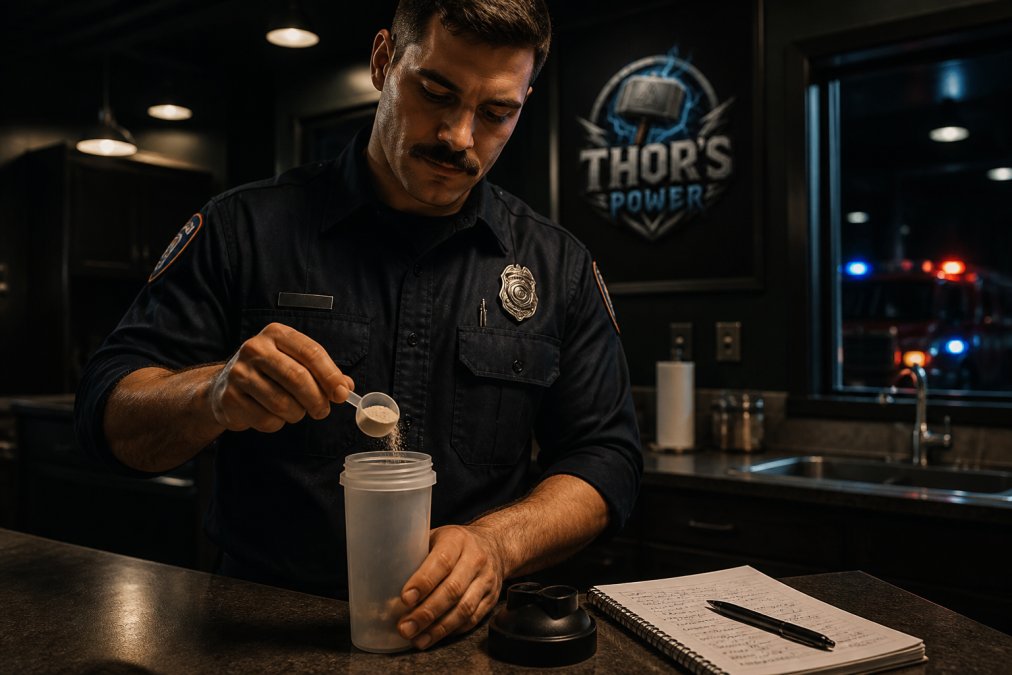
Caffeine and L-theanine are the backbone of almost every effective stack. Caffeine sharpens alertness. L-theanine smooths the edges and supports calm focus.
Cholinergics, Adaptogens, and Tyrosine Support
Layer in support ingredients once the core pairing feels stable:
- Alpha GPC supports acetylcholine, which plays a role in memory consolidation
- L-tyrosine supports dopamine pathways tied to motivation under stress
- Rhodiola rosea is an adaptogen used to help the body handle mental fatigue
- Taurine and Coenzyme Q10 round out energy and performance support
Step 3: Build Your Stack in Layers, Not All at Once
Add one ingredient at a time, and give each one about a week before adding the next. This is called titration, and it is the only reliable way to know what is actually working.
Layer |
What to Add |
Time to Test |
What to Watch |
|---|---|---|---|
Layer 1 |
Caffeine + L-theanine |
5-7 days |
Jitters, sleep quality |
Layer 2 |
Cholinergic (Alpha GPC) |
5-7 days |
Headache, mental clarity |
Layer 3 |
Adaptogen (rhodiola) |
5-7 days |
Mood, stress response |
Layer 4 |
Tyrosine support |
5-7 days |
Drive, appetite |
How to Cycle Nootropics Without Losing Focus Gains
Cycling is scheduled downtime that restores your response to a stack. Without it, the same dose produces less effect and you compensate by escalating, the classic caffeine treadmill. The fix is not a single universal schedule; it is matching the off-window to how each ingredient builds tolerance.
Why Tolerance Builds Differently by Ingredient
Tolerance is not one phenomenon. It depends on the mechanism:
- Adenosine antagonism (caffeine): Repeated daily blockade causes your brain to upregulate adenosine receptors, so the same dose feels weaker within one to two weeks of daily use. This is the fastest-tolerance ingredient in any focus stack.
- Catecholamine precursor loading (L-tyrosine): Tyrosine feeds dopamine and norepinephrine synthesis, but chronic high intake can blunt your endogenous response. Most practitioners cycle it rather than run it daily year-round.
- Cholinergic signaling (Alpha GPC, citicoline): Acetylcholine precursors tend to hold their effect longer, but continuous high-dose use is associated with headaches and mood flattening in some users, a signal to back off, not push through.
- Adaptogens (rhodiola rosea): Adaptogens are typically described as normalizing rather than stimulating, and many users report diminishing returns after four to six weeks of continuous use. The standard pattern is a washout week.
A Cycling Framework You Can Actually Follow
There is no FDA-mandated cycling schedule, this is a self-experimentation discipline, not a regulated protocol. A workable structure:
Ingredient class |
Typical on-window |
Typical off-window |
What to watch |
|---|---|---|---|
Caffeine |
5 days |
2 days |
Rising dose needed for same lift |
L-tyrosine |
4-5 days |
2 days |
Flattened motivation on off days |
Cholinergics |
5 days |
2 days |
Headache, irritability, brain fog |
Adaptogens |
4-6 weeks |
1 week |
Diminishing stress resilience |
The Reset Week
Every six to eight weeks, drop the stimulant entirely for five to seven days. Keep sleep, hydration, and protein intake steady so you can tell whether the break is restoring sensitivity or whether something else was driving the fatigue. If your baseline focus score (from Step 1) climbs back toward its pre-stack level during the reset, the cycle is working.
How to Know Cycling Is Working
A cycle is doing its job when your on-day dose stays flat or drops while your focus score holds. It is failing when you need more caffeine, more tyrosine, or a second serving to reach the same place. That drift is your signal to extend the off-window, not shorten it.
FDA Supplement Safety Guidelines and Drug-Nutrient Warnings
Supplements in the United States are regulated as food, not drugs, under rules overseen by the FDA's dietary supplement guidance. That means no pre-market approval for safety or effectiveness. The label is your main protection, so read it closely.
Interactions to Screen For Before You Stack
Talk to your doctor or pharmacist before stacking, especially if you take any prescription medication. Ingredients to screen carefully include:
- Stimulants: can compound with ADHD medications and decongestants
- Rhodiola and other adaptogens: may interact with antidepressants
- Cholinergics: can amplify effects of certain Alzheimer's medications
- Blood thinners: some herbs affect clotting
DIY Stacks vs. Pre-Made Formulas: Which Fits Your Shift
Most guides frame this as convenience versus control and stop there. That framing hides the two things that actually decide it: total cost per serving and dosing accuracy. Here is the honest breakdown.
The Real Cost of a DIY Stack
A DIY stack sounds cheaper because bulk powders have a low sticker price per gram. That math falls apart once you count what you actually buy:
- Caffeine + L-theanine: the cheapest layer, sold in bulk powder or tablets
- Alpha GPC or citicoline: one of the pricier single ingredients per serving
- L-tyrosine: inexpensive in bulk, but you buy a large tub to get a low per-serving cost
- Rhodiola rosea: standardized extracts cost more than raw root powder, and standardization is what you want
- Taurine, CoQ10, acetyl L-carnitine: each adds a bottle, a scoop, and a shelf-life clock
Where DIY Genuinely Wins
- Full dose control. You can run a lower caffeine dose than any commercial blend offers.
- Ingredient swaps. If Alpha GPC gives you headaches, you swap to citicoline without abandoning the whole formula.
- No fixed ratios. You are not locked into a manufacturer's idea of the right tyrosine-to-rhodiola balance.
Where Pre-Made Genuinely Wins
- Dosing accuracy. A pre-measured scoop or sachet removes the scale and the math. For potent ingredients, that accuracy matters more than the cost difference.
- Single-source accountability. One label, one lot number, one place to check for a recall.
- Portability. A sachet in a bag beats six bottles in a locker.
The Decision Rule
Your situation |
Better fit |
|---|---|
You want to tinker, have a scale, and will finish bulk powders before they expire |
DIY |
You mix at 3 a.m. and want one scoop |
Pre-made |
You react badly to one ingredient and need to swap it |
DIY |
You travel or work across multiple stations |
Pre-made |
You want the lowest possible caffeine dose |
DIY |
You want a transparent label without sourcing six vendors |
Pre-made with no proprietary blend |
Reading a Pre-Made Label Before You Buy
The label is your main protection, because dietary supplements are not pre-approved for safety or effectiveness the way drugs are. Two things to check:
- No proprietary blend. If the label lumps ingredients under one number, you cannot tell whether the effective ingredient is dosed meaningfully or sprinkled in for the label.
- Per-ingredient amounts. You want a milligram figure next to every active, not just a total.
Common Stacking Mistakes That Cause Crashes and Side Effects
The biggest mistake is stacking too much caffeine and calling it a stack. Three energy drinks plus a pre-workout is not a protocol, it is a crash waiting to happen.
Other mistakes we see often:
- Adding five ingredients on day one, then guessing which one caused the headache
- Taking a full stimulant dose within six hours of sleep
- Skipping water, which makes every side effect worse
- Ignoring prescription interactions
- Chasing a bigger dose instead of fixing sleep
Frequently Asked Questions
How long does it take for a nootropic stack to show results?
It depends on the ingredients. Caffeine and L-theanine affect alertness within 30 to 60 minutes. Adaptogens like rhodiola rosea and cholinergic support like Alpha GPC build gradually over one to two weeks of consistent use. Start with one ingredient at a time, wait a week, and note changes in focus, energy, and sleep quality before adding the next. Rushing the process makes it impossible to know which ingredient is helping and which is causing side effects.
Can you stack energy drinks with cognitive enhancers?
You can, but caffeine load adds up fast. A 150 mg caffeine serving paired with L-theanine supports alertness with less jitter, but stacking that on top of another caffeinated product pushes you toward anxiety, elevated heart rate, and a harder crash. Read every label, count total caffeine for the day, and keep your combined intake moderate. Pre-measured powdered formulas make it easier to track exactly how much caffeine you are getting per serving.
What should first responders avoid when stacking supplements?
Avoid proprietary blends that hide ingredient amounts, stimulants stacked without a calming counterpart, and any product that interacts with prescription medications. Screen every ingredient against your current medications and talk to your physician before combining anything. Also avoid taking stimulating nootropics within six hours of your planned sleep window, since poor sleep erodes the exact focus and mental clarity you are trying to protect.
Are there specific nootropics that help with shift work fatigue?
Caffeine paired with L-theanine is the most practical pairing for shift work because it supports alertness without the hard spike-and-crash cycle. L-tyrosine supports mental drive during prolonged stress, rhodiola rosea helps with fatigue resistance, and Alpha GPC supports cholinergic signaling tied to focus and memory. A multi-pathway formula like Bifröst Energy Patrol combines these ingredients with 150 mg caffeine per serving, which fits rotating shifts better than high-stimulant canned drinks.
Building a stack that holds up on hour twelve takes patience, tracking, and honest ingredients. Thor's Power was founded by a deputy sheriff who needed exactly that, and Bifröst Energy Patrol is the result: 150 mg of caffeine with L-theanine, Alpha GPC, L-tyrosine, rhodiola rosea, and Coenzyme Q10 in one transparent formula. No proprietary blend, no guesswork, just steady focus for the long shift. Get started with Thor's Power and give your next shift the focus it deserves.