
November 09, 2026 — Editorial Team
Why a Specialized Energy Mix Beats Generic Drinks on Night Shifts

Last Updated: November 6, 2026
Quick Summary
Yes, switching to a specialized energy mix is worth it for night shifts because you control the caffeine dose, timing, and total across a 12-hour shift, while generic cans lock you into one fixed dose. A mix also lists full ingredient amounts and costs less per serving.
- Front-load caffeine in the first third of your shift and take none in the final three hours before sleep.
- Bifröst Energy Patrol provides 150 mg caffeine with 200 mg L-theanine and no proprietary blend.
- A 30-serving tub runs $49.99, and the Loki Pack is $119.99 for 90 servings.
- Track your shift's total caffeine, since a serving, a half serving, and a coffee can exceed 300 mg.
- Start with one tub to test timing and dose on your own shift before buying a larger pack.
Table of Contents
- Why Night Shift Workers Are Reconsidering the Canned Energy Drink
- What the Best Energy Drink for Night Shift Actually Needs to Do
- When to Drink Caffeine on Night Shift: A Timing Framework
- Specialized Energy Mix vs. Generic Canned Drinks: A Side-by-Side Comparison
- Why an Energy Drink Replacement Powder Changes the Math
- A Night Shift Energy Drink Review: What to Check Before You Buy
- Hydration, Electrolytes, and Sleep After the Shift
- Start With One Tub and Test It on Your Own Shift
- Frequently Asked Questions
Why Night Shift Workers Are Reconsidering the Canned Energy Drink
Energy-drink consumption among night-shift workers is a growing concern, and users often underestimate how several stimulants stack up in one body. That finding lands hard for anyone working a 12-hour shift. The question is no longer whether caffeine helps.
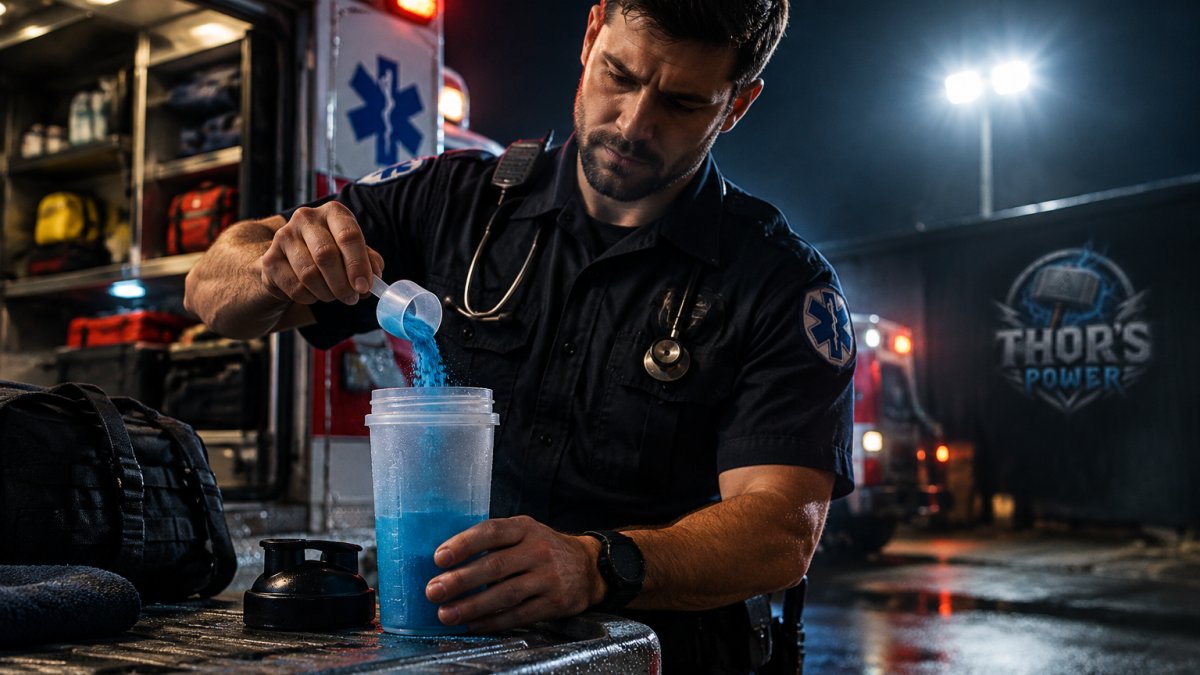
The core argument here is simple. A generic can is built for a shelf, not for a shift. An energy mix you portion yourself is built for the person drinking it. Everything below explains why that difference matters more than the brand on the label.
What the Best Energy Drink for Night Shift Actually Needs to Do
The best energy drink for night shift work delivers a measured caffeine dose, sustains alertness through the hardest hours, and clears your system before you try to sleep. Most canned options fail at least one of those three tests.
Caffeine Dose, Timing, and Shift Duration
Caffeine's half-life is the number that should drive your whole schedule. A dose taken too late in a shift is still circulating when you get home and pull the blinds. The National Center for Complementary and Integrative Health guidance on energy drinks notes that a growing body of evidence links these products to serious health effects, particularly for younger adults. Total intake across the shift matters more than any single can.
Ingredients That Support Focus Without the Crash
The research on L-theanine and caffeine pairing explains how that combination supports calm focus rather than a sugar rush. Bifröst Energy Patrol lists 150 mg caffeine with 200 mg L-theanine, plus L-tyrosine, taurine, Alpha GPC, acetyl L-carnitine, rhodiola rosea, and CoQ10, all at stated amounts with no proprietary blend.
When to Drink Caffeine on Night Shift: A Timing Framework
Front-load your caffeine. Take your largest dose in the first third of the shift, a smaller one at the midpoint if needed, and nothing in the final three hours before you plan to sleep. That single rule prevents more crashes than any product swap.
Here is the framework we recommend:
| Shift Stage | Caffeine Action | Why |
|---|---|---|
| First 2 hours | Full serving, 150 mg | Builds alertness before fatigue sets in |
| Midpoint | Half serving if needed | Bridges the low point without stacking |
| Final 3 hours | None | Protects post-shift sleep |
| Commute home | Water only | Avoids extending the stimulant window |
For a deeper set of tactics, see how to avoid energy crashes during night shifts.
Specialized Energy Mix vs. Generic Canned Drinks: A Side-by-Side Comparison
A specialized mix wins on transparency, portion control, and cost per serving. A generic can wins on convenience and nothing else. The honest way to decide is to compare the two formats on the factors that actually shape a 12-hour shift: dose, disclosure, sugar, cost, and how each one fits the hours you work.
| Factor | Specialized Energy Mix | Generic Canned Drink |
|---|---|---|
| Caffeine dose | Fixed and labeled per scoop | Fixed per can, often higher |
| Ingredient disclosure | Full amounts listed | Frequently a proprietary blend |
| Sugar | None added | Often high, unless diet |
| Cost per serving | Lower across a tub | Higher per unit |
| Portion control | Adjustable by the scoop | None |
| Portability | Powder, needs water and a shaker | Ready to drink |
| Serving size | You set it | The can sets it |
| Timing flexibility | Split a serving across a shift | One dose, one moment |
What the Table Does Not Show
The table hides the two things that decide most switches: how a serving is actually built, and what a shift's total caffeine looks like when you add up every source.
A generic can is a single fixed dose. If the label says 160 mg, that is what you get, and you cannot take half at hour two and half at hour six. A mix lets you build a serving to the shift, since you can measure out a partial scoop. That flexibility is the product.
Watch out: a mix only helps if you actually measure. A heaped scoop is not a labeled serving, and eyeballing powder is the fastest way to turn a controlled 150 mg into an unknown number.
Cost Per Serving and Total Caffeine Across a Shift
Bifröst Energy Patrol runs $49.99 for a 30-serving tub at 150 mg caffeine per serving. The Loki Pack is $119.99 for 90 servings.
The more useful number is total caffeine across the shift, not per drink. A common pattern looks like this: a 150 mg serving at the start, a half serving at the midpoint, and a coffee on the commute home. That is roughly 225 mg before the coffee and well over 300 mg after it, a total that many people never add up because each source felt small on its own. Track the shift total, not the single container.
When the Can Still Wins
There are real cases where the can is the right call. If you are sprinting out the door with no bottle and no water source, a ready-to-drink can is what you have. If you need a single fixed dose and never split servings, the can's simplicity is a feature. The switch is worth it when you want control over dose, timing, and total, and not before.
For a full breakdown of label transparency and crash timing, read Bifröst Energy Patrol vs. store-bought energy drinks.
Bifröst Energy Patrol Energy Supplement for First Responders →
Why an Energy Drink Replacement Powder Changes the Math
An energy drink replacement powder puts you in charge of the dose, the timing, and the total. That control is the product. You are not buying flavor; you are buying the ability to take 150 mg at hour two and nothing at hour ten.
A 2006 study on caffeinated energy drinks for night-shift workers noted that the impact in that setting was not fully known at the time, which is exactly why portion control matters. A 2015 review of energy drink effects concluded these products may benefit physical performance while also carrying detrimental health effects. Neither finding argues for drinking more. Both argue for drinking deliberately.
A Night Shift Energy Drink Review: What to Check Before You Buy
Most buying guides tell you to read the label. Few tell you what a good label looks like or how to compare two products side by side. Here is a neutral checklist you can run on any product, plus a worked example of how to total your caffeine across a shift.
The Label Checklist
- Caffeine listed in milligrams per serving, not just "per container"
- Every active ingredient shows an amount, no proprietary blend
- No added sugar, or a sugar amount you can live with
- Cost per serving calculated, not per container
- Serving size realistic for your shift
- No stimulant stacking with coffee, pre-workout, or other supplements
- Clear preparation instructions for powder products
A product that hides behind a proprietary blend is telling you something. If the amounts are not stated, you cannot compare them to anything else, and you cannot plan a shift total. Skip it.
A Worked Example: Totaling Caffeine Across a Shift
Say you start with a 150 mg serving at hour two, take a half serving (75 mg) at the midpoint, and drink a 95 mg cup of coffee on the commute home. That is 320 mg across the shift.
Run the same math on a generic can. Two cans at 160 mg each is 320 mg before any coffee. The number is the same, but the can gives you no way to split the dose, so the timing is fixed whether or not it fits your shift.
Watch out: the most common mistake is adding a scoop on top of your usual coffee without counting the combined caffeine. That is how a "clean" product turns into a jittery, sleepless shift.
What "Clean" and "Steady" Actually Mean
Broad claims like "clean energy" or "steady energy" are marketing, not specifications. The label-quality questions that matter are narrower: is the caffeine dose stated, is every active ingredient disclosed, is there added sugar, and is the serving size realistic for a 12-hour shift? A product can answer all four and still not suit you, but a product that fails any of them is not worth the trial.
For picks built for shift work, see the best electrolyte powder for shift work.
Hydration, Electrolytes, and Sleep After the Shift
Dehydration can feel like fatigue, so keep up with water through your shift. Pair every caffeinated serving with a full glass of water, and consider electrolytes if you sweat through turnout gear or a long patrol in heat. For picks built for shift work, see the best electrolyte powder for shift work.
Sleep is the other half. Caffeine does not replace sleep. Get home, hydrate, and protect your daytime sleep window.
Start With One Tub and Test It on Your Own Shift
One tub is the right starting point. It gives you 30 servings to test timing, dose, and how your body responds before you commit to a larger pack. Bifröst lists its amounts transparently: a measured 150 mg caffeine dose and no proprietary blend.
Thor's Power exists for the people who answer the call, and we would rather you test one tub than guess with a case. Start with Bifröst Energy Patrol and see how a measured energy mix holds up on your own shift.

Frequently Asked Questions
When should I drink caffeine on a night shift so it doesn't wreck my daytime sleep?
Front-load it. Take your main caffeine dose early in the shift, then stop several hours before your planned bedtime. Caffeine stays in the body for hours, so a drink at hour 10 of a 12-hour shift can still be working when you lie down. Track your own sleep rather than assume a drink is harmless. Keep total intake modest and log how you sleep after each shift.
Is a specialized energy mix actually better than a generic store-bought energy drink?
It depends on what you need. A specialized energy mix gives you a stated caffeine dose per serving and individually listed ingredient amounts, so you can control total intake across a 12-hour shift. Generic canned drinks vary widely in caffeine content and often hide amounts behind blends. Neither option replaces sleep.
What should night-shift workers look for in an energy drink or mix?
Check four things: caffeine per serving, whether every active ingredient has a listed amount, sugar content, and cost per serving. Bifröst Energy Patrol, for example, lists 150 mg caffeine and eight active ingredients with no proprietary blend, including 200 mg L-theanine. That transparency lets you add up total caffeine from coffee, tea, and pre-workout across a shift instead of guessing. Also confirm the product is intended for adults and read the package warnings before combining it with other stimulants.
Can energy drinks affect sleep after a night shift?
Yes. Caffeine blocks sleepiness rather than removing fatigue, so it can delay how quickly you fall asleep once your shift ends. Users may underestimate the combined effects of stimulants. Practical steps: keep your last caffeinated serving well before your planned sleep window, account for caffeine in coffee and tea as well, and treat daytime sleep as the priority it is for recovery. If sleep stays poor, cut total caffeine before adding more.
Your next shift will demand focus whether you are ready or not. Thor's Power built Bifröst Energy Patrol with 150 mg caffeine, 200 mg L-theanine, and eight fully disclosed ingredients so you can control the dose instead of guessing. Get started with Thor's Power and bring measured, no-guesswork energy to every shift you work.
