
November 10, 2026 — Editorial Team
Best Energy Drinks for Exercise: What Actually Works

Last Updated: November 5, 2026
Quick Summary
The best energy drinks for exercise match their caffeine dose to your body weight and training window, list every active ingredient with an amount, and skip the sugar load that causes a crash. Our pick is Bifröst Energy Patrol, with 150 mg caffeine, 200 mg L-theanine, and no proprietary blend.
- Take a caffeinated serving 30 to 60 minutes before your first set, not in the parking lot.
- Keep caffeine under 200 mg per serving so you can still have coffee or tea later.
- One 150 mg serving is a sensible starting dose for most people, not a maximum.
- Hydrate with water and electrolytes first, then use a caffeinated serving for focus.
- On shift days, take one serving early in the shift and never near the end.
Table of Contents
- How to Judge the Best Energy Drinks for Exercise
- The Best Energy Drink for Pre Workout Sessions
- The Best Energy Drink for Running and Endurance Work
- What Makes the Best Energy Drink Healthy for Daily Use
- The Best Energy Drink for Athletes in Strength and Power Sports
- Caffeine Dose, Timing, and Safety for Exercise
- Hydration and Electrolytes Alongside Energy Drinks
- Mixing Bifröst Into Your Training and Shift Routine
- Frequently Asked Questions
How to Judge the Best Energy Drinks for Exercise
The best energy drinks for exercise are the ones that match their caffeine dose to your body weight and training window, list every active ingredient with an amount, and skip the sugar load that sends you into a crash. That definition matters because the category has become crowded and inconsistent. A 2021 review of energy drink research found reported improvements in peak and mean power output, handgrip force, and vigor, while also flagging cardiovascular risk. Translation: the stimulant can help, but the formula around it decides whether you get a performance tool or a jittery 90 minutes.
At Thor's Power, we build for people who train around a shift schedule, so we judge every product on four things:
- Caffeine dose per serving, stated in milligrams, not hidden in a blend
- Total sugar and calories, because a 60-gram sugar hit is a recovery drink pretending to be a pre-workout
- Supporting ingredients with disclosed amounts, especially L-theanine, taurine, and tyrosine
- Format, since a powder you mix with water travels better than a can in a gear bag
| Criterion | What Good Looks Like | Red Flag |
|---|---|---|
| Caffeine disclosure | Exact mg per serving | "Energy blend" with no numbers |
| Sugar | 0-5 g per serving | 25 g or more |
| Ingredient amounts | Every active listed | Proprietary blend |
| Serving size | One clear scoop or can | Two servings per container |
Watch out: a can labeled "2 servings" doubles everything on the panel if you drink it in one go, which most people do.
The Best Energy Drink for Pre Workout Sessions
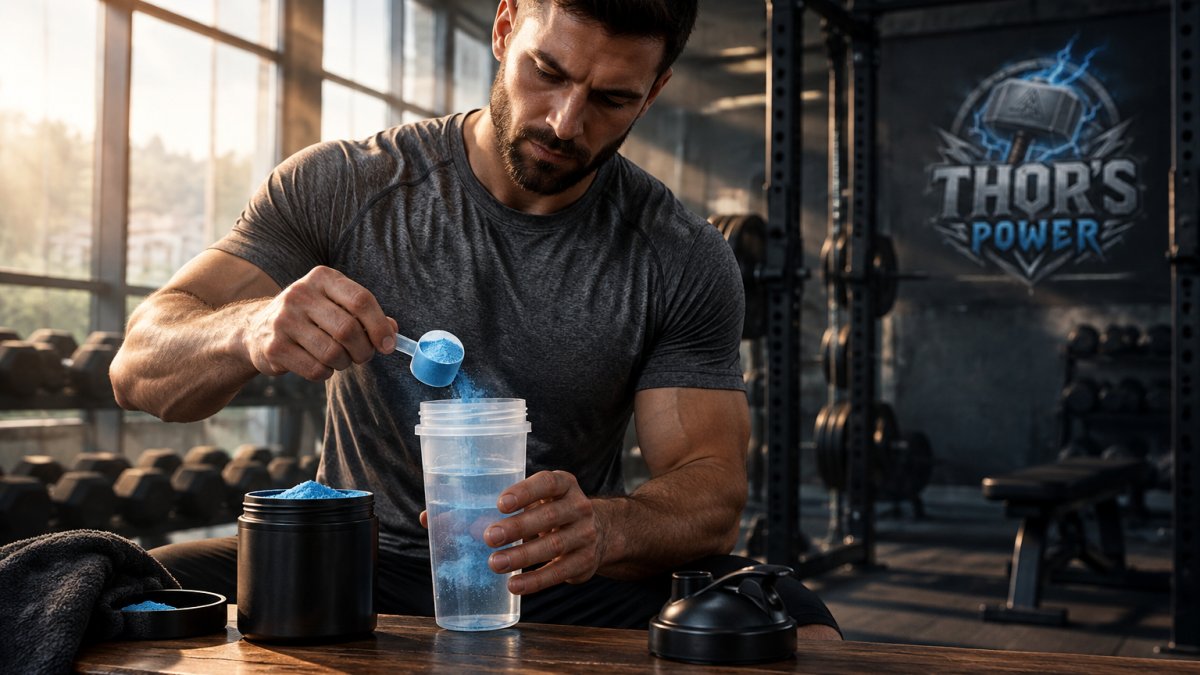
The best energy drink for pre workout is a low-sugar formula with a disclosed caffeine dose taken 30 to 60 minutes before your first set. That timing window is the practical part most people skip.
The woman is American.
Our pick for this slot is Bifröst Energy Patrol. Each serving carries 150 mg caffeine paired with 200 mg L-theanine, plus L-tyrosine at 750 mg, taurine at 1,000 mg, Alpha GPC, acetyl L-carnitine, rhodiola rosea, and CoQ10, all with individual amounts listed. The formula uses no proprietary blend.

Where it falls short: it is a powder only, so you need water and a shaker. If you want a can in your hand at the gym door, this is not that product.
Best for: lifters who train on a schedule and want a measured dose. Skip if: you need something shelf-stable with zero prep.
The Best Energy Drink for Running and Endurance Work
Endurance athletes need a different calculation. For running, the priority is fluid volume and steady blood glucose, not a big stimulant hit that spikes your heart rate before a long effort. A 2015 review of energy drink effects concluded that these products may benefit physical performance while also carrying possible detrimental health effects, which is exactly why dose control matters more on a 10-mile run than on a 45-minute lift.
Practical rules we give athletes:
- Keep caffeine modest and consistent across training days to avoid tolerance creep
- Drink water first, then the caffeinated serving, not the reverse
- Test any new product on an easy day, never on race day
EXTERNAL_LINK: Seven proven steps to boost endurance without jitters covers the training-side habits that make a caffeinated drink work better.
For runners who want a single product that also carries focus ingredients, Bifröst fits, but treat it as one tool among several. The Fenrir Founder's Edition Pack gives you two tubs and 60 servings.
Watch out: taking a caffeinated drink and a caffeinated gel within the same hour stacks doses fast.
What Makes the Best Energy Drink Healthy for Daily Use
A healthy energy drink is one you can use most days without exceeding a sensible total caffeine intake, without added sugar, and without ingredients you cannot identify. Daily use is the stress test. A formula that feels fine twice a week can cause sleep disruption at five.
Three markers separate daily-drinkable products from occasional ones:
- Caffeine under 200 mg per serving, leaving room for coffee or tea later
- Zero added sugar, so the drink is not a dessert with a stimulant attached
- A disclosed formula, because you cannot manage what you cannot measure
Bifröst contains 150 mg of caffeine per serving. The trade-off is honest: it still contains caffeine, and it does not replace sleep. Anyone who is pregnant, nursing, on medication, or advised to avoid caffeine should skip it entirely.
EXTERNAL_LINK: How Bifröst compares with traditional energy drinks breaks down the caffeine, focus ingredients, and sugar differences side by side.
The Best Energy Drink for Athletes in Strength and Power Sports
For strength and power athletes, the best energy drink for athletes is one taken before heavy compound work, where alertness and drive matter more than sustained fuel. Power output is the measured variable here. The ClinicalTrials.gov registered trial NCT05559372 compared a commercial energy drink, a non-caloric option, and a placebo on performance measures, which reflects how much the field still has to learn about which formulas actually move numbers.
What we look for in this category:
- Caffeine dose scaled to body weight, not a fixed can size
- Ingredients that support focus under load, such as tyrosine and Alpha GPC
- No heavy sugar load before a session that already stresses your system
Bifröst's formula pairs measured caffeine with focus-oriented ingredients and a transparent panel. If you are a bigger athlete running a higher daily caffeine total, one scoop may not be enough, and that is a conversation to have with your doctor rather than a reason to double up on your own.
Bifröst Energy Patrol Energy Supplement for First Responders →
Caffeine Dose, Timing, and Safety for Exercise
Caffeine dosing by body weight is the angle most product guides skip, and it is the one that changes outcomes.
Here is the conversion most athletes find useful. One kilogram equals 2.2 pounds, so divide your body weight in pounds by 2.2, then multiply by 3 and by 6 to get your personal range.
| Body weight | Low end (3 mg/kg) | High end (6 mg/kg) | What one 150 mg serving covers |
|---|---|---|---|
| 130 lb (59 kg) | ~177 mg | ~354 mg | Most of the low end |
| 160 lb (73 kg) | ~218 mg | ~436 mg | About two-thirds of the low end |
| 180 lb (82 kg) | ~245 mg | ~490 mg | Just over half the low end |
| 220 lb (100 kg) | ~300 mg | ~600 mg | Half the low end |
That gap is the point. One 150 mg serving is a sensible starting dose for most people, not a maximum, and a 220-pound athlete at the low end of the range would need two servings to reach it.
The timing curve matters as much as the dose. Caffeine takes time to peak in the bloodstream and stays active for hours, so a serving taken late in the day can still be active at night.
Safety basics we would tell any athlete:
- Track total daily caffeine across coffee, tea, pre-workout, and energy drinks
- Avoid caffeine within several hours of planned sleep, especially on shift schedules
- Expect reduced effect with daily use as tolerance builds; a rest-day skip helps reset it
- Check with a physician if you have cardiovascular concerns, take stimulant medications, or are pregnant or nursing
EXTERNAL_LINK: Caffeine and theanine for calm alertness explains why the pairing shows up in so many formulas, including ours.
Hydration and Electrolytes Alongside Energy Drinks
Hydration and energy are separate problems, and confusing them is a common mistake.
Workout duration, intensity, and heat drive your actual needs, and the thresholds are more concrete than most guides admit:
| Session | Fluid priority | Sodium priority | Caffeinated drink? |
|---|---|---|---|
| Under 60 min, moderate conditions | Water to thirst | Not needed | Optional, for focus |
| 60-90 min, or hot weather | 16-32 oz per hour | 300-600 mg sodium per hour | Optional, dose early |
| 90+ min endurance | 16-32 oz per hour with electrolytes | 300-700 mg sodium per hour | Use with caution; watch heart rate |
A simple way to estimate your own sweat rate: weigh yourself before and after a one-hour session, add back any fluid you drank, and the difference in pounds times 16 gives roughly your fluid loss in ounces per hour.
Heat changes the math. In hot conditions you can lose well over a liter per hour, and plain water alone can dilute sodium if you are sweating heavily for hours.
For readers building a hydration plan around training, EXTERNAL_LINK: which electrolyte powder works best for endurance athletes covers how to choose one.
Our approach is simple: hydrate with water and electrolytes, then use a caffeinated serving for focus. They are not substitutes, and on a long hot session the fluid and sodium come first.
Watch out: drinking a large caffeinated serving right before a long run in heat can raise heart rate and gut discomfort at the exact moment you need steady fluid intake, so keep the dose modest and early.
Mixing Bifröst Into Your Training and Shift Routine
The practical question is where a caffeinated drink fits in a week that includes training and work. Our answer: pick a fixed slot, keep the dose steady, and do not stack it with other stimulants.
A routine that works for shift-based athletes:
- Training day: one serving 30 to 60 minutes before the session
- Shift day: one serving early in the shift, never near the end
- Rest day: skip it, and let tolerance reset
If you want to stock up, the Loki Pack at $119.99 delivers 90 servings, and EXTERNAL_LINK: the Bifröst Energy Patrol product page has the full panel and mixing directions.
Frequently Asked Questions
What energy drink is best for workouts?
The best energy drinks for exercise list caffeine and every active ingredient in exact amounts. Look for a dose around 150 mg caffeine paired with L-theanine, which supports focus without the jittery edge. A powdered mix like Bifröst Energy Patrol lets you control serving size and water volume, so you can sip it before training instead of drinking a full can. Skip products with proprietary blends, since you cannot tell how much of each ingredient you are getting.
How much caffeine should you have before a workout?
Effects vary by person. A practical starting point is 150 mg caffeine, roughly the amount in one serving of Bifröst Energy Patrol, taken 30 to 45 minutes before training. Account for coffee, pre-workout, and any other caffeine you have already consumed that day. If you are sensitive to stimulants or take medication, talk to a healthcare professional first.
Is an energy drink better before or during exercise?
Before is the more common choice. Caffeine takes time to absorb, so drinking it 30 to 45 minutes ahead of a session lines up with the start of training. For long endurance work, some athletes split the dose and sip through the session. Running and cycling make that easier than lifting, where a shaker bottle gets in the way. Bifröst mixes with water, so you can carry a partial serving and finish it between sets or miles.
Are energy drinks good for a workout?
Treat them as a tool with a dose and a timing window, not a default drink.
The hardest part of picking an energy drink for exercise is not finding one with caffeine. It is finding one that tells you exactly what is in it, so you can dose it like a training variable instead of guessing. Thor's Power built Bifröst Energy Patrol around that principle: 150 mg caffeine, 200 mg L-theanine, eight active ingredients with individual amounts, no proprietary blend, and no sugar. Get started with Thor's Power and bring a measured, transparent formula to your next session.
